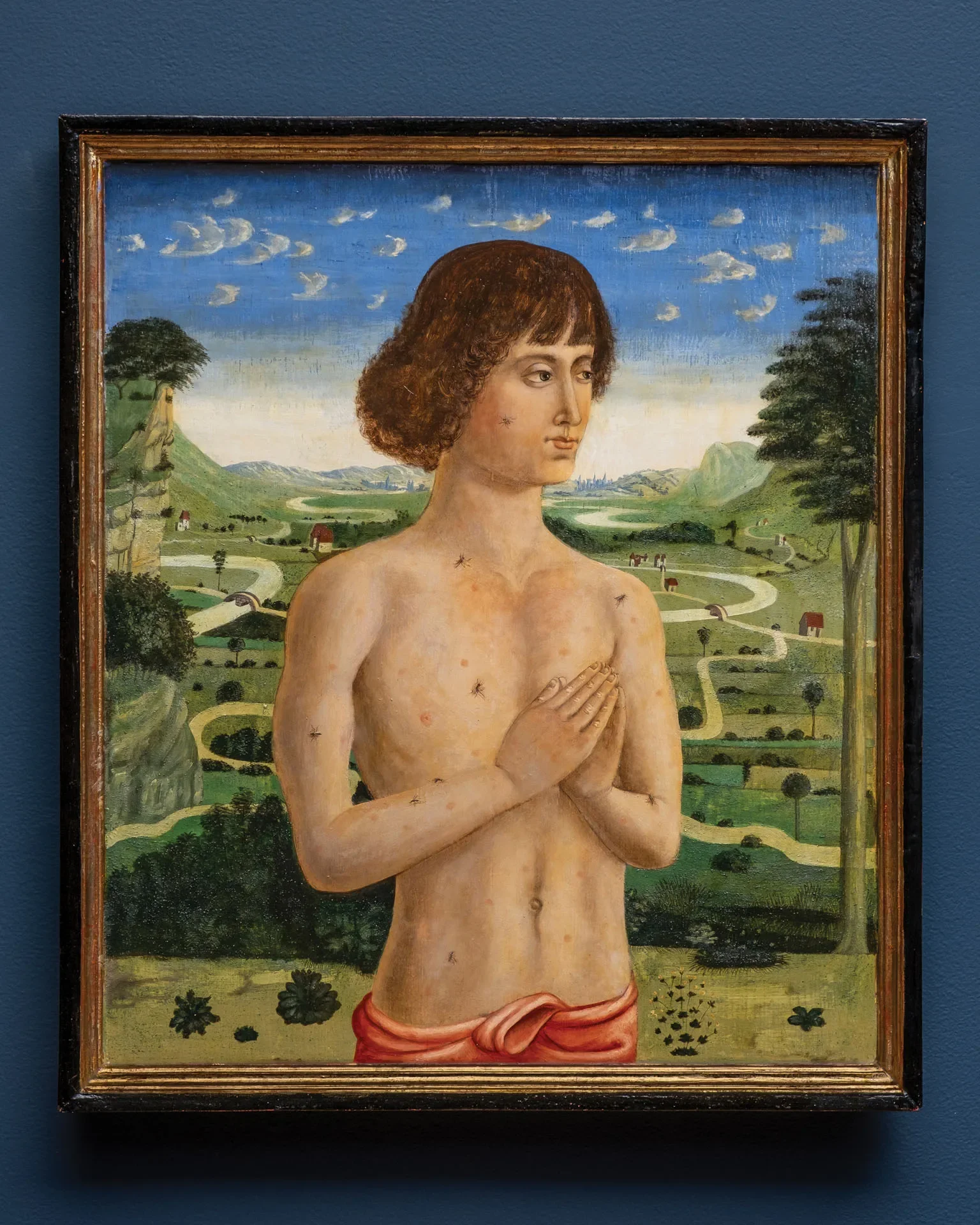
Malo Chapuy Neo-medieval paintings conjure apocalyptic visions.
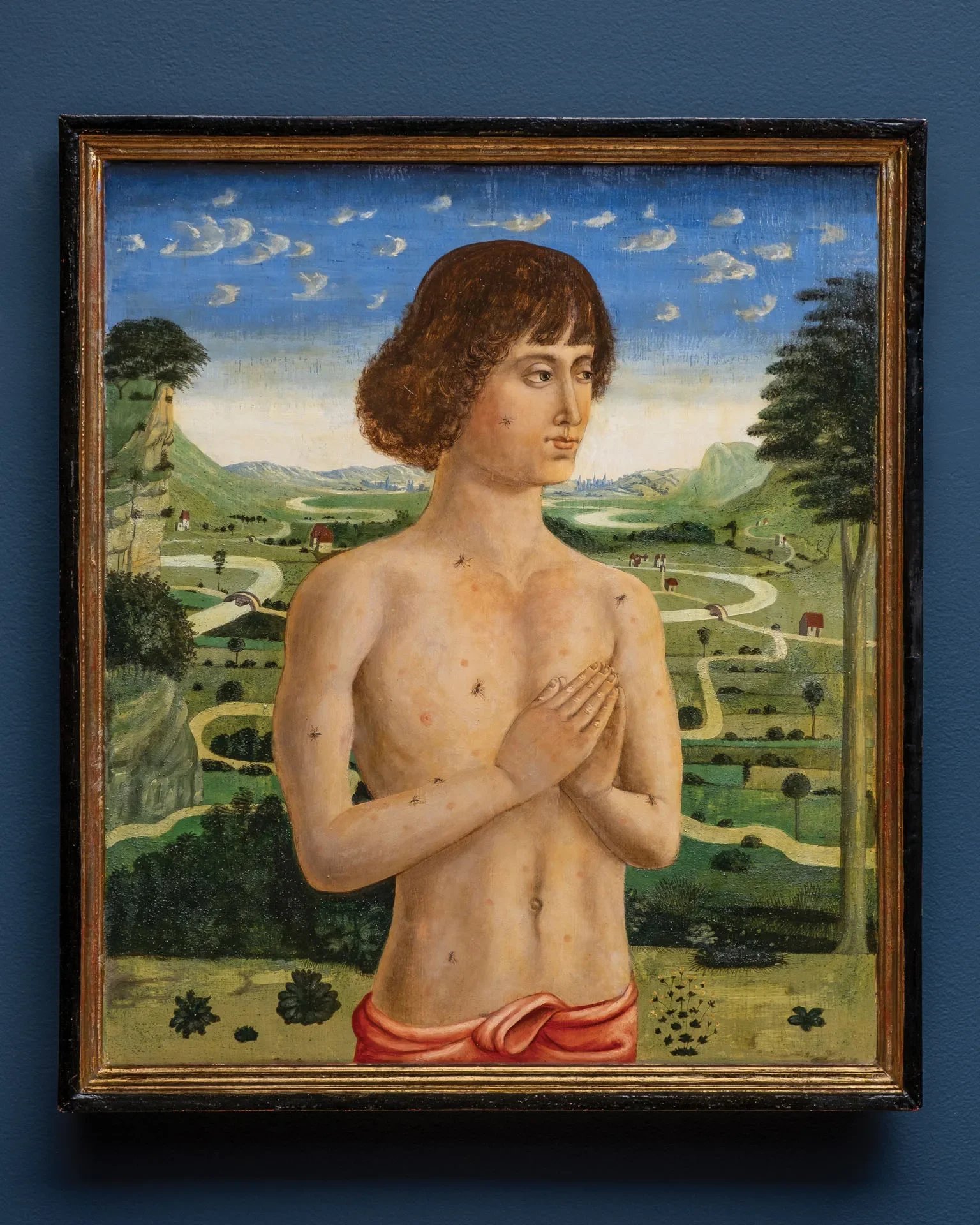
Saint with mosquitoes, 2025 - Tempera and oil on wood
Medieval art continues to resurface as a foil for the art of subsequent generations. In the quattrocento, Vasari coined the term “gothic” to decry the “barbarousness” of such pre-Renaissance styles. By the mid-19th century, however, revivalists looked to it for inspiration, an egress from the calcified obsequiousness of neoclassicism and the depredations of industrialization. The latter had torn up the old social fabric, killed hundreds of thousands during the Napoleonic wars, and displaced millions from the countryside to the cities. Yet what emerged was a radically new interaction between old forms and new ideologies. William Morris, the socialist founder of the Arts and Crafts movement, believed medieval art embodied artisanal brilliance and collaboration. By contrast, Augustus Pugin, a monarchist architect of Westminster Palace, hoped it would usher in “a return to the faith and the social structures of the Middle Ages.