All in Reviews

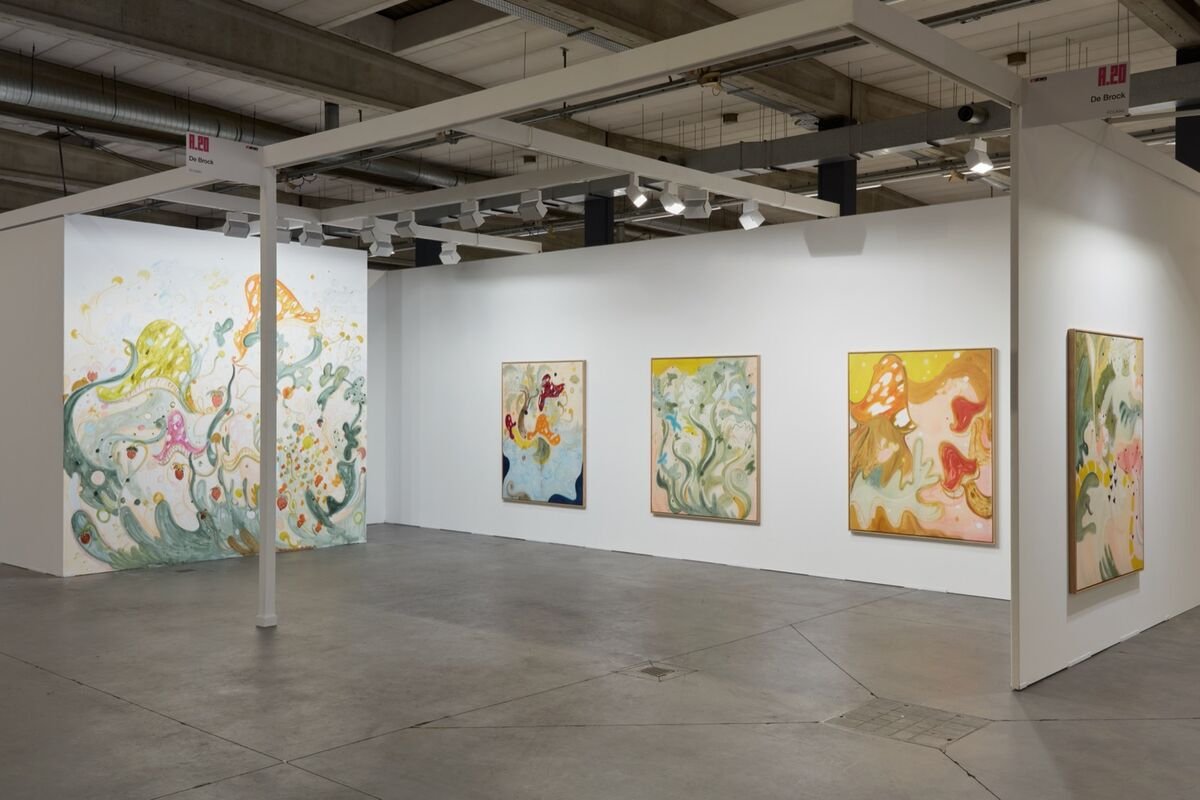
The 7 Best Booths at Art Antwerp 2021

The inaugural edition of Art Antwerp opened on Thursday to a modest but determined crowd of collectors and art professionals who filled the halls of the Antwerp Expo event center, on the Flemish city’s southside. A new art fair on the European circuit, Art Antwerp is an extension of Art Brussels, one of Europe’s longest running and most prominent fairs.

The fair features 59 galleries, the vast majority of which are Belgian, with the rest filled out by the bordering countries of France, Germany, Luxembourg, and the Netherlands, with the exception of one Austrian gallery. Yet despite its size and parochiality, Art Antwerp demonstrated that fairs don’t need sprawling global monoliths to pack a powerful punch. Sometimes, less is more. Indeed, the vast majority of the participating galleries appeared to have brought their A game, with a particularly strong showing of young figurative painters.

Mère nourricière ou Terre brûlée ?

Si les avancées scientifiques et imaginaires du XIXe siècle apparaissent pour la plupart heureuses pour les artistes et leurs publics, il existe néanmoins des points de friction et de gêne qui surgissent avec plus de fréquence vers la fin du siècle, suite notamment à la parution de L’Origine des espèces de Charles Darwin (1859), qui enflamme les débats sur la nature de l’homme et son rapport aux autres espèces. C’est ce qu’a tenté de nous montrer l’exposition « Les origines du monde : l’invention de la nature au XIXe siècle » au musée d’Orsay, du 19 mai au 18 juillet 2021. Une réaction fait par exemple naître ce que les commissaires appellent un courant à la recherche « d’une immortalité laïque » avec l’occultisme et le spiritisme prônés par des artistes comme Kupka, ou avec la théosophie et l’anthroposophie qui accompagnent la naissance de l’art abstrait de Kandinsky, Klint et Mondrian.

The 10 Best Booths at FIAC 2021

After a two-year hiatus due to COVID-19, the Foire Internationale de l’Art Contemporain (FIAC), France’s premier art fair, has come roaring back. On a cool autumn day, swarms of masked visitors descended upon the Grand Palais Éphémère (GPÉ), a temporary structure of the same dimensions and footprint as the 19th-century Grand Palais (which is usually the site of the fair, but is currently undergoing renovation). Elsewhere in the French capital, satellite fairs Asia Now and Paris Internationale are back in action, too.

What to See in Paris During FIAC

The conceptual work of Palestinian-French artist Taysir Batniji retraces his bureaucracy-filled journey from the Gaza Strip to Paris, exploring themes of displacement, erasure and loss. In the video installation Background Noise (2007), currently on view at MAC VAL, the artist films himself during an air-raid. Staring stoically into the camera as the walls around him shake from the force of nearby explosions, Batniji offers a glimpse of the untenability of daily life for Palestinians. Alongside this piece is another of the exhibition’s most moving works, the series ‘To my Brother’ (2012), which consists of 60 incisions into paper that trace the contours of photographs taken at the artist’s brother’s wedding. The drawings offer up ghostly likenesses of Batniji’s family and sibling, who was felled by an Israeli sniper’s bullet during the first Intifada in 1987, which, from a certain distance, begin to disappear like faded memories.

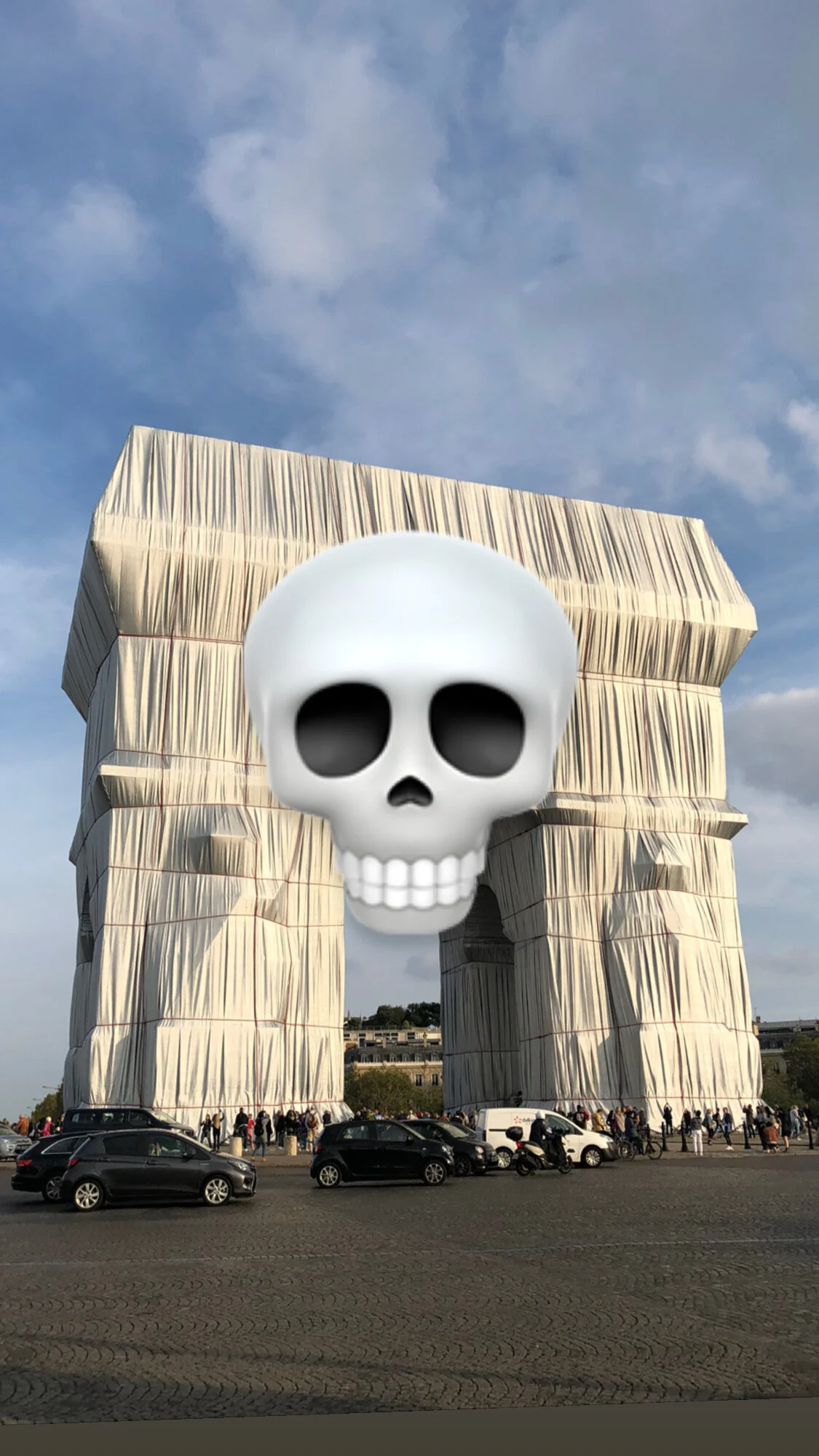
Understanding ‘L’Arc de Triomphe, Wrapped’

Death and beauty go hand in hand. As paradoxical and macabre as that idea might seem, many anthropologists will tell you that ancestral burial rituals are a significant measure of human civilization. Many of the first objects shaped by human sensibilities, such as the Triangular Tombstones from Le Moustier in Peyzac-le-Moustier, Dordogne, France, were related to death and the afterlife. Ancient humans were entombed with their most precious possessions. Bones of ancestors conferred legitimacy upon rulers, proving royal descendance, giving birth to modern notions of cultural heritage or, in the case of relics, like the Byzantine Reliquary in the Shape of a Sarcophagus (400–600) at the Metropolitan Museum of Art, New York, an unbroken lineage with divine actors.

Napoléon : la longue marche de l’apologie vers l’histoire

Il y a deux cents ans Napoléon s’éteint à Saint-Hélène. Aujourd’hui, la Réunion des musées nationaux (RMN) célèbre le bicentenaire de sa mort avec une immense exposition à la grande halle de La Villette. Ici tout est à échelle impériale, à commencer par l’entrée où les bannières noires au nom de « Napoléon » en lettres jaunes fluorescentes font plus penser à l’avant-première d’un défilé de mode qu’à une exposition d’art et d’histoire. À l’intérieur, l’esthétique est moins moderne mais tout aussi pompeuse : blason napoléonien, tapis rouges, dorures, etc.

Marcin Dudek Deconstructs his Football Firm Past

The chaotic period that followed Poland’s transition from communism to capitalism is an important thematic backdrop to Marcin Dudek’s exhibition ‘Slash & Burn II’ at Harlan Levey Projects’s new space in the Heyvaert district of Brussels. In this powerful show – which comprises installation, drawing and performance – the Polish artist explores his own experience of coming of age in the 1990s as a working-class football fan in a country with crumbling infrastructure, dysfunctional governance and a traumatic history of being caught in the crossfire of successive European conflicts.

9 Shows to See during Art Brussels Week

Slowly but surely, life in European cities is returning to normal. Masks are still ubiquitous features of daily life, but since the middle of May, bars, restaurants, museums, and art galleries have opened again to a public eager to reconnect with social and cultural life. The easing of COVID-19 restrictions has come at a perfect time for art lovers. From June 3rd through 6th (and through June 14th online on Artsy), Brussels, Antwerp, the coastal Belgian town of Knokke, and Paris will host a very special edition of Art Brussels, reformatted and renamed as Art Brussels Week 2021.


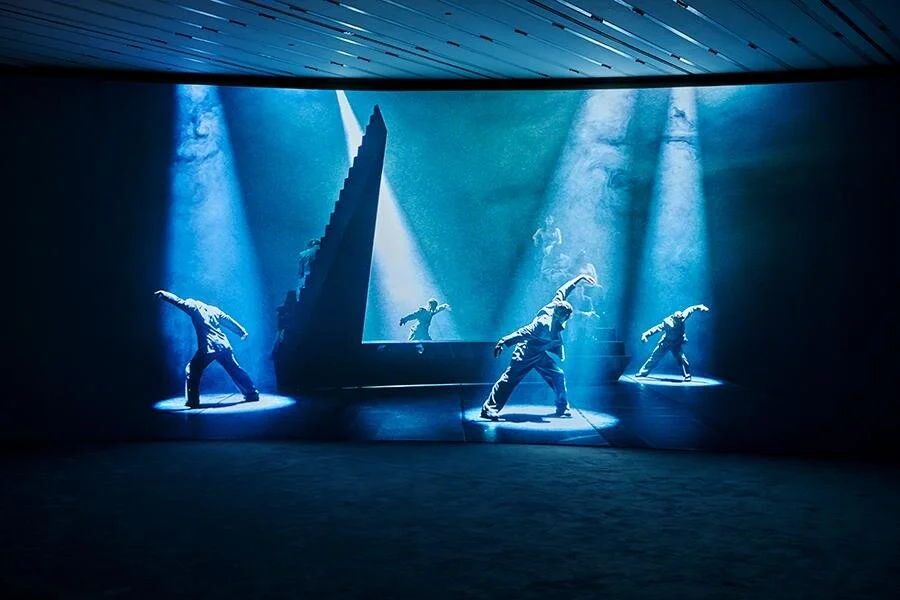
Wu Tsang’s Renewal of the Collective

In the second volume of his Prison Notebooks (1926), Italian communist Antonio Gramsci suggests that critical consciousness stems from the understanding that one’s identity is shaped by historical processes ‘which [have] deposited in you an infinity of traces, without leaving an inventory.’ The notion of an infinitely mutable mosaic of identities that we carry with ourselves (class, gender and race) is at the heart of ‘Visionary Company’, the exhibition by filmmaker and performance artist Wu Tsang and her multidisciplinary collective Moved by Motion, currently at Lafayette Anticipations in Paris.

Street art. Le pochoir couché sur papier

Si le street art nous paraît aujourd’hui lié à une certaine modernité urbaine, ses origines remontent en réalité à l’art néolithique, comme nous le rappelle une photographie de la main en négatif sur le mur de la grotte Chauvet-Pont d’Arc. Cette photo ne représente qu’un des aspects du portrait que Christian Guémy, alias C215, dresse du pochoir. Son Manuel du pochoir retrace l’histoire de cet art, sans doute l’outil le plus utilisé dans la réalisation d’une œuvre de street art, après la bombe de peinture. Dans cette histoire originelle se mêlent l’expérience personnelle et un grand savoir-faire technique qui découle d’une vie passée à peindre les murs du monde entier. Mais la biographie de C215 n’est que suggérée ici et là par le Manuel, qui se concentre plutôt sur des explications synthétiques mais complètes de la multitude d’aspects propres à la peinture au pochoir. Loin d’être un outil simplifiant la peinture jusqu’à la transformer en geste mécanique, il s’agit d’un instrument qui démultiplie les possibilités du rendu de l’image. L’ouvrage évoque les liens entre la peinture au pochoir et d’autres techniques artistiques à l’instar de l’estampe et la photographie. Afin d’exposer pleinement la multiplicité d’usages que cette méthode, l’ouvrage insère des entretiens avec 17 différents street artistes. Au total, il reste accessible tout en étant didactique.

5 Must-See Shows from Paris Gallery Weekend

The seventh edition of Paris Gallery Weekend took place this past weekend, a month and a half later than in previous years due to the COVID-19 pandemic. Sixty participating galleries presenting 72 exhibitions are spread across four neighborhoods or, one could say, three temporalities. Saint-Germain-des-Prés, the Marais, the 8th arrondissement, and Pantin-Romainville symbolically represent the past, present, and future of the Parisian art market.

L’affiche cubaine, une arme de lutte

L’art dit « socialiste » est pour beaucoup synonyme de propagande, sans réel intérêt esthétique. L’exposition Affiches cubaines, révolution et cinéma, 1959-2019 au Musée d’arts décoratifs (MAD) à Paris, en présente au contraire un tout autre genre : coloré, exubérant et surtout ouvert à diverses influences provenant de l’art contemporain mondial, telles le pop, le psychédélisme ou l’art optique (op’ art) et cinétique.

Luiz Roque’s Films Pay Tribute to Marginalized Subcultures

The six short films, two photographs and a sculptural installation in Luiz Roque’s solo show at Passerelle – Centre d’art contemporain offer a snapshot of the artist’s 20-year career. Eschewing strict chronological order, the works in ‘República’ speak to the artist’s persistent engagement with both global and local issues through his weaving of gender, race, class politics, ecology, modernism and science fiction into sensuous fragmentary, filmic narratives.

La XVIe biennale d’Istanbul, écologie ou barbarie ?

ISTANBUL—Sur ce qui paraît être une chaîne d’information en continu, nous voyons l’arrivée d’un cortège officiel d’automobiles à l’entrée d’un palais présidentiel. La porte de l’une des limousines noires s’ouvre et en émerge un sac-poubelle, de la taille d’un homme. Le sac-poubelle et le Président s’étreignent avant d’entrer dans le palais. Dans la prochaine scène, les deux apparaissent derrière deux pupitres identiques lors d’une conférence de presse où les flashes des caméras les illuminent et les journalistes vocifèrent pour leur poser des questions. Ensuite, nous voyons le sac-poubelle s’adresser aux Nations Unies, avant que la caméra ne passe enfin sur une masse de plastique, de la taille d’un continent, flottant dans l’océan.

What Does It Mean to Be European?

Europe is in crisis. Right-wing populisms are on the rise and have been for some time now. As the European Union’s once triumphant liberal hegemony sputters under the weight of its own contradictions, politicians such as Nigel Farage, Marine Le Pen and Matteo Salvini have seized on a generalized feeling of precariousness to address a more libidinal obsession with national identity, defined in opposition to the non-European other.

Geometric Dreams from Mexico to the Tierra del Fuego

‘I have dreamed geometry / I have dreamed the point, the line, the plane, and the volume / I have dreamed yellow, blue and red.’ These lines from Jorge Luis Borges’s poem ‘Descartes’ (1981) are found on the opening page of the catalogue to ‘Géométries sud, du Mexique à la Terre de feu’ (Southern Geometries, from Mexico to the Tierra del Fuego). A fitting epigraph, they announce the vertiginous profusion of coloured shapes in the nearly 250 works by more than 70 artists and creators from the pre-Columbian period to the present.

Stone Fruit and Paper Insects: Erika Verzutti’s Play with the Soft and the Hard

The first work that the visitor encounters upon entering the exhibition is Opening with rain (2018), which looks, at first glance, like a large slab of stone. It's actually painted papier maché, with traces of colorful paint – blood-orange, fluorescent yellow and deep turquoise – set into recessed spaces that appear as zoomorphic hieroglyphs, describing something between insect and totem. These markings radiate out from a stone egg suspended within a crater in the lower half of the composition.

DAU’s Totalitarian Reality Show: Artwork of the Century or Stalinist Cosplay?

It is more than a film but not exactly an exhibition. Not quite theatre or performance, although elements of both are omnipresent. It has Mongolian shamans, Russian orthodox priests, rabbis, imams and psychoanalysts, if you need to vent. There are meticulously detailed recreations of Soviet-era apartments inhabited by people who only speak Russian. Eminent performance artist Marina Abramović is supposed to make an appearance. (She is one of the project’s many celebrity ‘ambassadors’ who also include physicists and mathematicians Carlo Rovelli and Dimitri Kaledin, theatre directors Peter Sellars and Romeo Castellucci, artists Carsten Höller and Philippe Parreno and the designer Rei Kawakubo, among others.) And, for one euro, a stony-faced barman will serve you watery coffee or a litre of beer. It is DAU, the multimedia art ‘experience’-cum-independent Soviet state that is being hailed by its creators as the art-event of the century and by the French press as a disastrous flop.

Tomás Saraceno: How Spiders Build their Webs

For the fourth iteration of the Palais de Tokyo’s ‘Carte Blanche’ series – where a single artist is invited to transform the entirety of the Paris museum’s cavernous 13,000 m2 exhibition space – Berlin-based Argentinian artist Tomás Saraceno has conceived a massive black and white parcours. His installations encourage visitors to reflect on their place within the infinitely complex networks that structure our existence, from the minutiae of dust particles and the vibrations of spiderwebs to the collisions of galaxies in the universe. In so doing, the exhibition, which is titled ‘On Air’, explicitly situates itself within the ecologically conscientious conversations around climate change and humanity’s changing relationship to nature in the age of the Anthropocene.

Cooper Jacoby explore les souvenirs d’enfance et la critique sociale

PARIS—La première chose que constate le visiteur de l’exposition Cooper Jacoby, Susceptibles sont les sculptures de couleurs vives—bleu ciel, orange et jaune fluorescents. Elles se dégagent de la blancheur aveuglante des salles de High Art, galerie située au rez-de-chaussée de l’immeuble où Georges Bizet a commencé à composer l’opéra Carmen. Entouré par des lambris blanchis du XIXe siècle, les œuvres de Cooper Jacoby, jeune artiste américain, font allusion aux espaces du quotidien, intérieurs et extérieurs, privés et publics.