Laura Poitras “Toute la beauté et le sang versé”

Le film Toute la beauté et le sang versé de Laura Poitras s’ouvre sur un petit groupe de militantes agglutinées sur le trottoir près du Metropolitan Museum of Art (Met) de New York. Un complot est en train de se nouer. Ensuite, des images de l’intérieur du Met. La caméra fait un panoramique sur l’enseigne de l’aile où se trouve la collection égyptienne : l’aile Sackler, ces méga-mécènes du monde de l’art qui ont fait fortune dans la fabrication d’opioïdes hyper addictifs. Les gardiens renvoient des regards méfiants. Puis quelqu’un se met à crier : “Honte à Sackler”. Les autres se joignent à lui comme un chœur grec. Les vestes tombent au sol, révélant des t-shirts ornés des initiales “P.A.I.N” (Painkiller Addiction Intervention Now). Des flacons de pilules oranges sont jetés en l’air et dans le bassin autour du temple d’Isis de Dendur. Alors que les gardiens tentent frénétiquement d’arracher les banderoles, les activistes mettent en scène un die-in – simulant la mort. À la fois performance et manifestation, ils tombent au sol, mous et immobiles, à l’exception de leur chant continu.

Cerith Wyn Evans Reimagines Duchamp and Stella

Cerith Wyn Evans is the type of artist whose engagement with the forms and figures of modern art makes his work a joy to look at – especially for those able to untangle its dense web of references. For his most recent exhibition, ‘no realm of thought…’ at Marian Goodman, Paris – one of a two-part exhibition happening concurrently at the gallery in New York – Evans converses with the likes of Marcel Duchamp, Félix Guattari, Frank Stella and David Tudor.

Alice Neel’s Portraiture and Politics

Indeed, rather than two sections divided by a wall – an unfortunate Cold War metaphor if ever there was one – the exhibition could be viewed as an expansive survey, a growing family or an inventory of universal humanism. There is something about the way that Neel depicts bodies – often fat, flaccid and wrinkled, circumscribed with heavy black contours and modelled with undulating impasto brushstrokes – which almost seems to caress their flickering forms into being. Her fearless and loving approach to rendering the human figure in all of its beauty, ugliness and diversity speaks to Neel’s warmth, love and openness towards others. To that end, Pompidou’s mezzanine-level gallery is perfect for this small, dense retrospective. Connected to the pedestrian streets outside by floor-to-ceiling windows, this space gives visitors the impression of being, like Neel’s painting, among and with the masses of humankind.

Ângela Ferreira’s Radio of Resistance

‘Friends, comrades, this is Rádio Voz da Liberdade, on behalf of the Patriotic Front for National Liberation …’ The voice of Portuguese communist broadcaster Stella Piteira Santos echoes up from the lower level of the Regional Contemporary Art Fund (FRAC) in Marseille. The space is currently host to Ângela Ferreira’s ‘Rádio Voz da Liberdade’, the Portuguese artist’s homage to the guerrilla radio station broadcast in Algeria from 1962 to 1974 by exiled Portuguese dissidents of António de Oliveira Salazar’s dictatorship.

Russian invasion puts Ukraine’s Venice Biennale pavilion on hold

On Thursday morning, Ukrainians in various cities awoke to explosions as the Russian military initiated an invasion of the neighbouring country by land, sea and air. In the early hours of the assault, its implications for the Ukrainian Pavilion at the Venice Biennale, which opens in April 2022, might have seemed like an afterthought. But Russia’s total war on Ukraine promises to have total consequences, not just for the Russian stock market and the energy supply of central Europe, but also for the Ukrainian cultural sector.

Max Pinckers's Fantastic Fictions

‘Double Bind’, Max Pinckers’s first museum retrospective, at FOMU Photo Museum Antwerp, presents five of the Belgian artist’s projects from the past half-decade. Each embodies his critical stance on the truth claims of photography, an approach that Pinckers terms ‘Speculative Documentary’. Conceived with fellow artists Thomas Bellinck, Michiel De Cleene and An van. Dienderen (a grouping that refer to themselves as The School of Speculative Documentary), the theory seeks to problematize various documentary formats – from photography and film to theatre and performance – blurring the line between reality and fiction.

Maxwell Alexandre’s Debut at Palais de Tokyo Considers Power Dynamics in Art Spaces

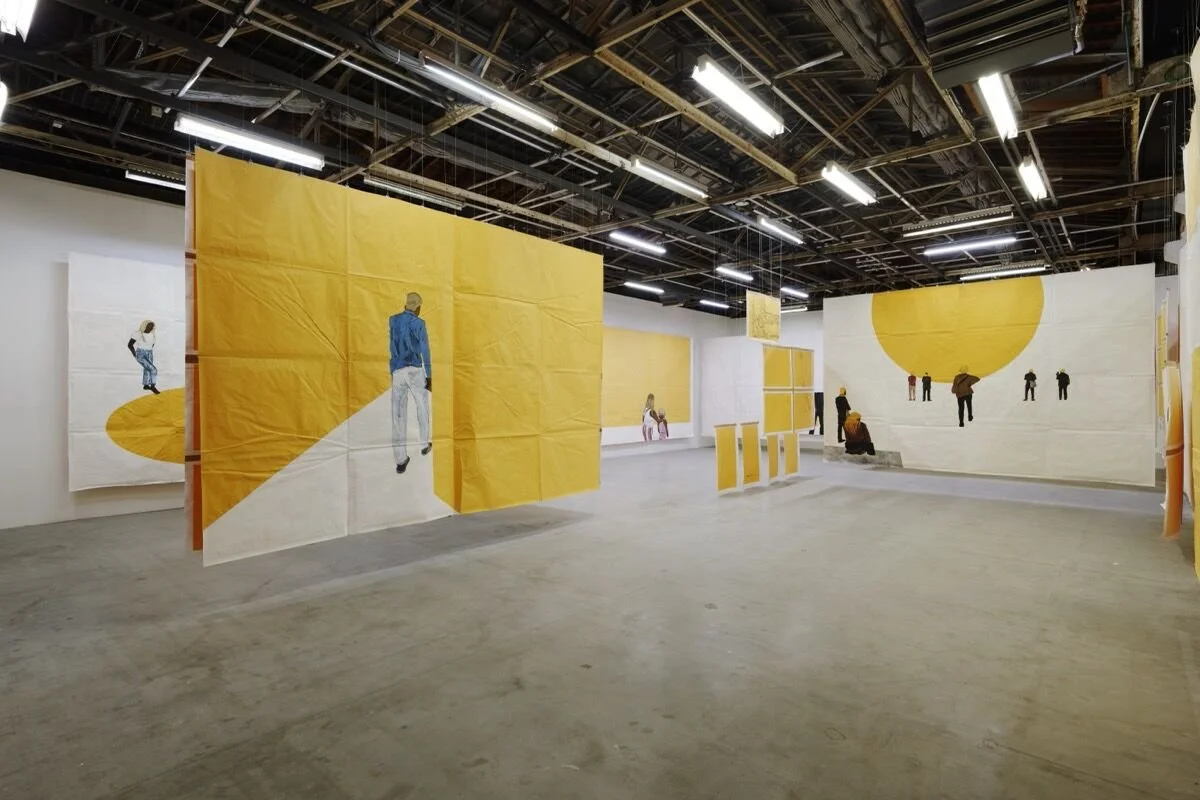
Maxwell Alexandre’s exhibition “New Power,” currently on view at the Palais de Tokyo in Paris through March 20th, was inspired in part by the 2018 music video for “Apeshit” by Beyoncé and Jay-Z. The hip-hop couple’s triumphant traipsing through Europe’s most famous museum, the Louvre, reignited conversations about the sociology of museum visitors; the value and accessibility of culture; and above all, the tension between the museum’s pretentions of being a democratizing, educational space despite the troubled histories of colonialism and plunder that had built up its collections. The global resurgence of racism and xenophobia, exemplifed by the presidencies of Donald Trump in the United States and Jair Bolsonaro in Brazil, seemed to lend these concerns additional urgency.

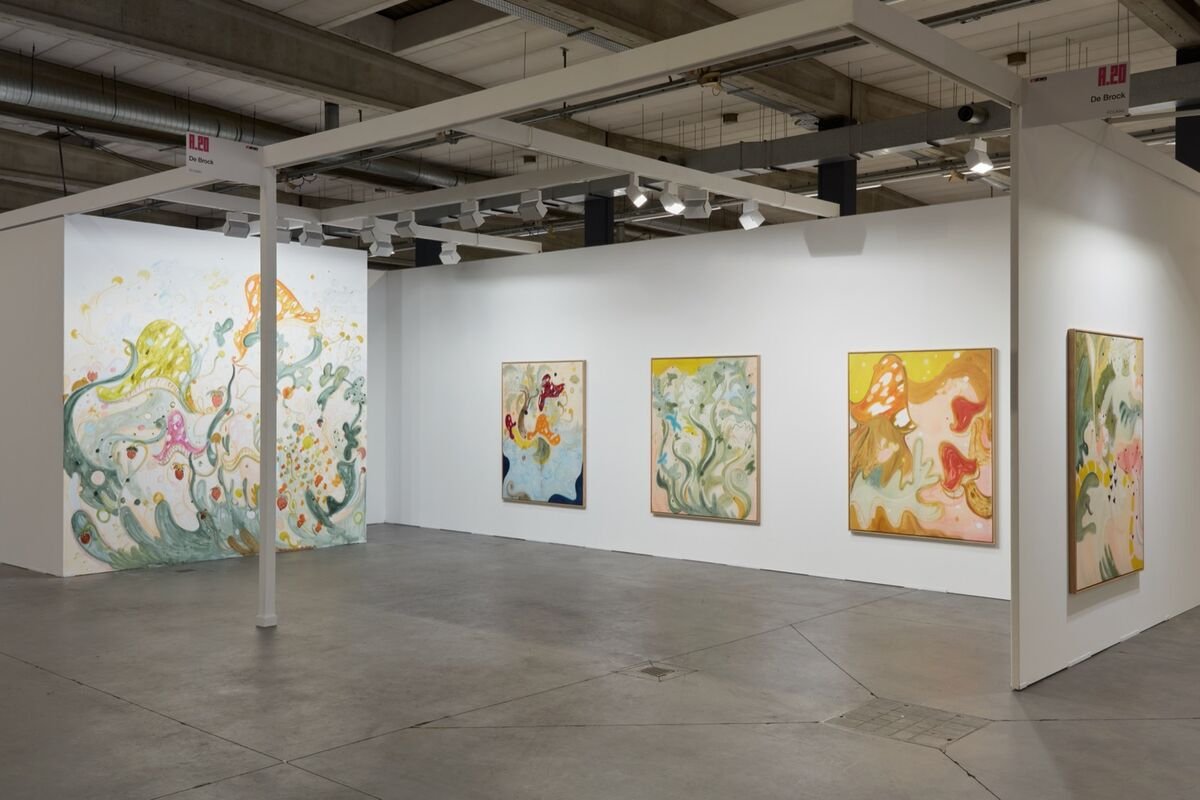
The 7 Best Booths at Art Antwerp 2021

The inaugural edition of Art Antwerp opened on Thursday to a modest but determined crowd of collectors and art professionals who filled the halls of the Antwerp Expo event center, on the Flemish city’s southside. A new art fair on the European circuit, Art Antwerp is an extension of Art Brussels, one of Europe’s longest running and most prominent fairs.

The fair features 59 galleries, the vast majority of which are Belgian, with the rest filled out by the bordering countries of France, Germany, Luxembourg, and the Netherlands, with the exception of one Austrian gallery. Yet despite its size and parochiality, Art Antwerp demonstrated that fairs don’t need sprawling global monoliths to pack a powerful punch. Sometimes, less is more. Indeed, the vast majority of the participating galleries appeared to have brought their A game, with a particularly strong showing of young figurative painters.

Revue Noire — Histoires Histoires à la fin de l’histoire

Pendant presque une décennie – de 1991 à 1999 – Revue Noire a changé indéniablement la perception de l’art contemporain africain dans l’imaginaire occidental. Fondée par Jean Loup Pivin, Simon Njami, Pascal Martin Saint Leon et Bruno Tilliette, Revue Noire n’a eu de cesse de déjouer certains poncifs à travers sa présentation novatrice de la production culturelle africaine. La plupart des arguments de ses auteurs sont structurés autour d’un axe géographique, se concentrant sur certains pays ou villes africaines et leurs diasporas dans des villes européennes. Cette structuration a pour effet de mettre en scène la grande diversité et la variété des productions culturelles présentes sur le continent africain. Rassemblant des formes et des médias aussi divers que la peinture, la sculpture, l’architecture, le cinéma, la danse, la littérature, la photographie, la mode et le design, Revue Noire écarte les questions sociales à l’exception notable d’un numéro 19 spécial consacré à la lutte contre le SIDA.

Mère nourricière ou Terre brûlée ?

Si les avancées scientifiques et imaginaires du XIXe siècle apparaissent pour la plupart heureuses pour les artistes et leurs publics, il existe néanmoins des points de friction et de gêne qui surgissent avec plus de fréquence vers la fin du siècle, suite notamment à la parution de L’Origine des espèces de Charles Darwin (1859), qui enflamme les débats sur la nature de l’homme et son rapport aux autres espèces. C’est ce qu’a tenté de nous montrer l’exposition « Les origines du monde : l’invention de la nature au XIXe siècle » au musée d’Orsay, du 19 mai au 18 juillet 2021. Une réaction fait par exemple naître ce que les commissaires appellent un courant à la recherche « d’une immortalité laïque » avec l’occultisme et le spiritisme prônés par des artistes comme Kupka, ou avec la théosophie et l’anthroposophie qui accompagnent la naissance de l’art abstrait de Kandinsky, Klint et Mondrian.

What Sold at FIAC 2021

The return of Paris’s Foire Internationale d’Art Contemporain (FIAC) after a two-year hiatus due to COVID-19 was met with much trepidation. Despite the strong showing at this month’s Frieze Week in London and the relative success of online sales—which have become an absolute necessity for many galleries over the past year and a half—a mid-year review by Dr. Clare McAndrew on “Resilience in the Dealer Sector” found that French galleries had suffered a 6% decrease in sales due to COVID-19 restrictions, various new regulatory constraints (including the fallout from Brexit), and even political uncertainty, as the 2022 French presidential race begins to gear up. According to the report, over half (58%) of galleries from the major European markets of Spain, France, and Germany were skeptical about their chances of growth this year. However, the mood at FIAC’s VIP opening on Wednesday was one of cautious optimism that seemed to persist and evolve into a mixture of lukewarm satisfaction and even relief as the fair’s 47th edition drew large crowds to the Grand Palais Éphémère up through its closing on Sunday.

The 10 Best Booths at FIAC 2021

After a two-year hiatus due to COVID-19, the Foire Internationale de l’Art Contemporain (FIAC), France’s premier art fair, has come roaring back. On a cool autumn day, swarms of masked visitors descended upon the Grand Palais Éphémère (GPÉ), a temporary structure of the same dimensions and footprint as the 19th-century Grand Palais (which is usually the site of the fair, but is currently undergoing renovation). Elsewhere in the French capital, satellite fairs Asia Now and Paris Internationale are back in action, too.

What to See in Paris During FIAC

The conceptual work of Palestinian-French artist Taysir Batniji retraces his bureaucracy-filled journey from the Gaza Strip to Paris, exploring themes of displacement, erasure and loss. In the video installation Background Noise (2007), currently on view at MAC VAL, the artist films himself during an air-raid. Staring stoically into the camera as the walls around him shake from the force of nearby explosions, Batniji offers a glimpse of the untenability of daily life for Palestinians. Alongside this piece is another of the exhibition’s most moving works, the series ‘To my Brother’ (2012), which consists of 60 incisions into paper that trace the contours of photographs taken at the artist’s brother’s wedding. The drawings offer up ghostly likenesses of Batniji’s family and sibling, who was felled by an Israeli sniper’s bullet during the first Intifada in 1987, which, from a certain distance, begin to disappear like faded memories.

Understanding ‘L’Arc de Triomphe, Wrapped’

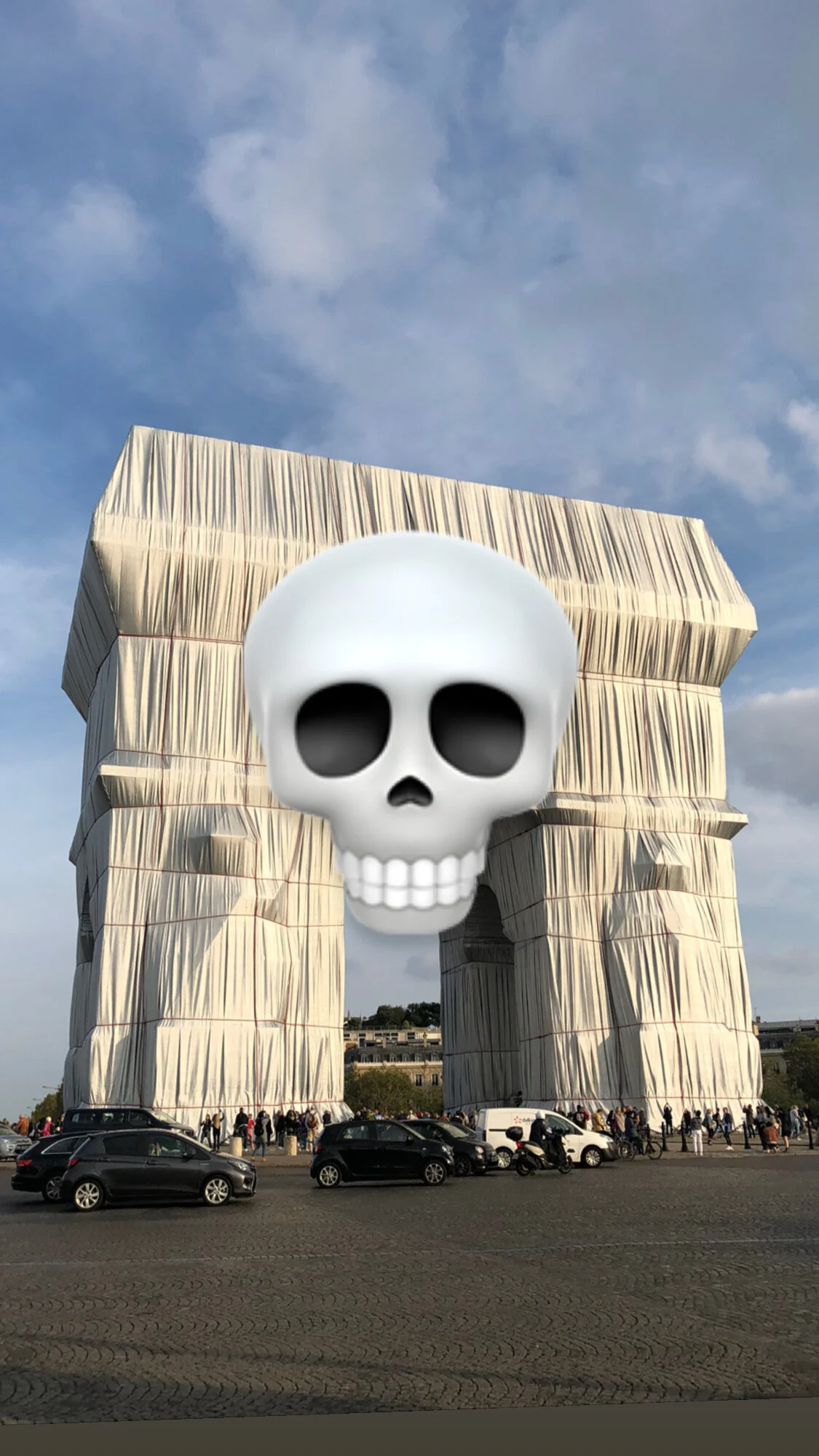
Death and beauty go hand in hand. As paradoxical and macabre as that idea might seem, many anthropologists will tell you that ancestral burial rituals are a significant measure of human civilization. Many of the first objects shaped by human sensibilities, such as the Triangular Tombstones from Le Moustier in Peyzac-le-Moustier, Dordogne, France, were related to death and the afterlife. Ancient humans were entombed with their most precious possessions. Bones of ancestors conferred legitimacy upon rulers, proving royal descendance, giving birth to modern notions of cultural heritage or, in the case of relics, like the Byzantine Reliquary in the Shape of a Sarcophagus (400–600) at the Metropolitan Museum of Art, New York, an unbroken lineage with divine actors.

Napoléon : la longue marche de l’apologie vers l’histoire

Il y a deux cents ans Napoléon s’éteint à Saint-Hélène. Aujourd’hui, la Réunion des musées nationaux (RMN) célèbre le bicentenaire de sa mort avec une immense exposition à la grande halle de La Villette. Ici tout est à échelle impériale, à commencer par l’entrée où les bannières noires au nom de « Napoléon » en lettres jaunes fluorescentes font plus penser à l’avant-première d’un défilé de mode qu’à une exposition d’art et d’histoire. À l’intérieur, l’esthétique est moins moderne mais tout aussi pompeuse : blason napoléonien, tapis rouges, dorures, etc.

Marcin Dudek Deconstructs his Football Firm Past

The chaotic period that followed Poland’s transition from communism to capitalism is an important thematic backdrop to Marcin Dudek’s exhibition ‘Slash & Burn II’ at Harlan Levey Projects’s new space in the Heyvaert district of Brussels. In this powerful show – which comprises installation, drawing and performance – the Polish artist explores his own experience of coming of age in the 1990s as a working-class football fan in a country with crumbling infrastructure, dysfunctional governance and a traumatic history of being caught in the crossfire of successive European conflicts.

9 Shows to See during Art Brussels Week

Slowly but surely, life in European cities is returning to normal. Masks are still ubiquitous features of daily life, but since the middle of May, bars, restaurants, museums, and art galleries have opened again to a public eager to reconnect with social and cultural life. The easing of COVID-19 restrictions has come at a perfect time for art lovers. From June 3rd through 6th (and through June 14th online on Artsy), Brussels, Antwerp, the coastal Belgian town of Knokke, and Paris will host a very special edition of Art Brussels, reformatted and renamed as Art Brussels Week 2021.


The Parisian Open-Air Museum

he first public artworks in the Jardin des Tuileries were placed there by Louis XV in the 18th century and, following the French Revolution, more were transferred from royal estates. Today, the gardens are a veritable outdoor museum for sculptures from the 17th to 21st centuries.

The Divine Translation by Estelle Coppolani

I was visited again yesterday. The end of work had given me back to the world. I sat on a bench shaded by a large red palm tree, watching the nightfall. The ravine on the edge of which I sat held a fragrant rut, soaked with dead leaves and spoiled fruit. This natural repository had mixed the stench of several fallen lychee decomposed down to their oily entrails with the scents of macerated herbs. The hour came when the fading daylight shot its gilded rays on the surrounding pediments and sometimes also on a piece of exposed sheet metal or on a strip of cornice. I knew that for the next hour or two my skin would take on that sandy tint, while a small tribe of mosquitos drank themselves sick on blood like sour milk enclosed within my own veins.